| Предыдущая тема :: Следующая тема |
| Автор |
Сообщение |
Orio 
Зарегистрирован: 24.02.2007
Сообщения: 29545
Откуда: West Emilia
Expire: 2012-12-04
|
 Отправлено: Вт Сен 14, 2010 2:22 pm Заголовок сообщения: Amazing thing I found about Contarex |
|
Отправлено: Вт Сен 14, 2010 2:22 pm Заголовок сообщения: Amazing thing I found about Contarex |
|
|
Orio wrote:
When you focus a lens (I only have the Planar 2/50, so I don't know if it works this way for all lenses), say starting from infinity and going closer, the camera automatically adjusts the aperture to make up for the loss of light due to the increased distance of the front glass from the focal plane! 
If you watch the iris, you can see it very slightly adjust to more open the nearer you focus.
I never saw anything like that before!!
_________________
Orio, Administrator
T*
NE CEDE MALIS AUDENTIOR ITO
Ferrania film is reborn! http://www.filmferrania.it/
Support the Ornano film chemicals company and help them survive!
http://forum.mflenses.com/ornano-chemical-products-t55525.html |
|
| Наверх |
|
 |
Spotmatic

Зарегистрирован: 18.08.2008
Сообщения: 4045
Откуда: Netherlands
|
Отправлено: Вт Сен 14, 2010 2:28 pm Заголовок сообщения: |
|
Отправлено: Вт Сен 14, 2010 2:28 pm Заголовок сообщения: |
|
|
Spotmatic wrote:
It's clear why they call the Contarex system over-engineered. Great ideas and technically superb, but bad from an user's point of view. I think a Contarex is not considered the peak of user-friendliness 
Having said that: please send it to me so that I can see the feature with my own eyes. 
_________________
Peter - Moderator
Pentax K-5 + Pentax 645 + Canon 5D + Bessa RF 10,5cm Heliar, and a 'little' bag full of MF lenses. The lens list is * here *.
My fast 80s: Asahi-Kogaku Takumar 83mm f/1.9 - Super-Takumar 85mm f/1.9 - FA 77mm f/1.8 Limited - Cyclop 85/1.5 (Helios-40 innards) - Komura 80mm f/1.8 - Meyer Görlitz Primoplan 7,5cm 1:1.9 - Carl Zeiss Jena 80mm f/1.8 Pancolar - Canon 85mm f/1.8 S.S.C. - Canon 85mm f/1.2 S.S.C. Aspherical |
|
| Наверх |
|
|
pst


Зарегистрирован: 25.08.2010
Сообщения: 108
Откуда: Austria
Expire: 2013-08-17
|
Отправлено: Вт Сен 14, 2010 2:36 pm Заголовок сообщения: |
|
Отправлено: Вт Сен 14, 2010 2:36 pm Заголовок сообщения: |
|
|
pst wrote:
When I took apart my CZJ 180/2.8 for relubeing, I was surprised to see that the guide of the aperture ring which runs in the groove of the mechanism inside the lens was slightly tilted. (It is not in a line with the long axis of the lens, but at a slant). This means that for a set aperture it still turns the aperture mechanism inside the lens by I guess 2-3 ° when focussing throught the whole range.
(Anybody understand what I am saying ?  )
Bottom line: Yes, my CZJ also ever so slightly changes aperture when focussing.
_________________
Regards, Patrick. |
|
| Наверх |
|
|
exaklaus


Зарегистрирован: 11.08.2009
Сообщения: 1633
Откуда: Niederrhein, Germany
Expire: 2011-12-02
|
Отправлено: Вт Сен 14, 2010 2:44 pm Заголовок сообщения: |
|
Отправлено: Вт Сен 14, 2010 2:44 pm Заголовок сообщения: |
|
|
exaklaus wrote:
The older Exakta automatic Flektogons 2,8/35 which focus very close, do the same. And if I remember correctly, the 4/135 auto-Sonnar lenses, too.
Klaus
_________________
my Ebay auctions
Canon 5D II,
Fuji GW690III, Fuji G617, Fujifilm X-E1
Bessaflex TM
Tachihara 4"x5"
Summilux-R 1:1,4/50
Canon FD 85mm 1:1,2
Color-Heliar 75mm F2.5 SL
www.autoselbstfotografie.de
www.classic-cameras-and-lenses.de |
|
| Наверх |
|
|
visualopsins

Зарегистрирован: 05.03.2009
Сообщения: 11703
Откуда: California
Expire: 2027-07-11
|
Отправлено: Вт Сен 14, 2010 3:05 pm Заголовок сообщения: |
|
Отправлено: Вт Сен 14, 2010 3:05 pm Заголовок сообщения: |
|
|
visualopsins wrote:
The lenses are rated 2.8/35, 2/50, 4/135, 2.8/180, but the diaphragm opens as lens is focused close? What, then is the true lens rating? Obviously, the lenses have a different f/# at closest focus than at infinity focus. f/2 indicates f/1.5-f/2.5, while f/2.0 indicates f/1.95-f/2.05, so is manufacturer stretching specifications?
_________________
☮☮☮☮☮☮☮☮☮☮☮☮☮☮☮☮☮☮☮☮☮☮☮☮☮☮☮☮☮☮☮☮ like attracts like! ☮☮☮☮☮☮☮☮☮☮☮☮☮☮☮☮☮☮☮☮☮☮☮☮☮☮☮☮☮☮☮☮
Cameras: Sony ILCE-7RM2, Spotmatics II, F, and ESII, Nikon P4
Lenses:
M42 Asahi Optical Co., Takumar 1:4 f=35mm, 1:2 f=58mm (Sonnar), 1:2.4 f=58mm (Heliar), 1:2.2 f=55mm (Gaussian), 1:2.8 f=105mm (Model I), 1:2.8/105 (Model II), 1:5.6/200, Tele-Takumar 1:5.6/200, 1:6.3/300, Macro-Takumar 1:4/50, Auto-Takumar 1:2.3 f=35, 1:1.8 f=55mm, 1:2.2 f=55mm, Super-TAKUMAR 1:3.5/28 (fat), 1:2/35 (Fat), 1:1.4/50 (8-element), Super-Multi-Coated Fisheye-TAKUMAR 1:4/17, Super-Multi-Coated TAKUMAR 1:4.5/20, 1:3.5/24, 1:3.5/28, 1:2/35, 1:3.5/35, 1:1.8/85, 1:1.9/85 1:2.8/105, 1:3.5/135, 1:2.5/135 (II), 1:4/150, 1:4/200, 1:4/300, 1:4.5/500, Super-Multi-Coated Macro-TAKUMAR 1:4/50, 1:4/100, Super-Multi-Coated Bellows-TAKUMAR 1:4/100, SMC TAKUMAR 1:1.4/50, 1:1.8/55
M42 Carl Zeiss Jena Flektogon 2.4/35
Contax Carl Zeiss Vario-Sonnar T* 28-70mm F3.5-4.5
Pentax K-mount SMC PENTAX-A ZOOM 1:3.5 35~105mm, SMC PENTAX ZOOM 1:4 45~125mm
Nikon Micro-NIKKOR-P-C Auto 1:3.5 f=55mm, NIKKOR-P Auto 105mm f/2.5 Pre-AI (Sonnar), Micro-NIKKOR 105mm 1:4 AI, NIKKOR AI-S 35-135mm f/3,5-4,5
Solinon 1:5.6/18 ASPH.
Tamron SP 17mm f/3.5 (51B), Tamron SP 17mm f/3.5 (151B), SP 500mm f/8 (55BB), SP 70-210mm f/3.5 (19AH)
Vivitar 100mm 1:2.8 MC 1:1 Macro Telephoto (Kiron)
|
|
| Наверх |
|
|
Orio
Зарегистрирован: 24.02.2007
Сообщения: 29545
Откуда: West Emilia
Expire: 2012-12-04
|
Отправлено: Вт Сен 14, 2010 3:11 pm Заголовок сообщения: |
|
Отправлено: Вт Сен 14, 2010 3:11 pm Заголовок сообщения: |
|
|
Orio wrote:
| exaklaus писал(а): |
The older Exakta automatic Flektogons 2,8/35 which focus very close, do the same. And if I remember correctly, the 4/135 auto-Sonnar lenses, too.
Klaus |
I didn't know. Well here's a solid argument in favour of the old cameras - unless DSLRs do that too hiddenly...
_________________
Orio, Administrator
T*
NE CEDE MALIS AUDENTIOR ITO
Ferrania film is reborn! http://www.filmferrania.it/
Support the Ornano film chemicals company and help them survive!
http://forum.mflenses.com/ornano-chemical-products-t55525.html |
|
| Наверх |
|
|
Orio
Зарегистрирован: 24.02.2007
Сообщения: 29545
Откуда: West Emilia
Expire: 2012-12-04
|
Отправлено: Вт Сен 14, 2010 3:17 pm Заголовок сообщения: |
|
Отправлено: Вт Сен 14, 2010 3:17 pm Заголовок сообщения: |
|
|
Orio wrote:
| visualopsins писал(а): |
| The lenses are rated 2.8/35, 2/50, 4/135, 2.8/180, but the diaphragm opens as lens is focused close? What, then is the true lens rating? Obviously, the lenses have a different f/# at closest focus than at infinity focus. f/2 indicates f/1.5-f/2.5, while f/2.0 indicates f/1.95-f/2.05, so is manufacturer stretching specifications? |
As far as I am aware, lens manufacturers calibrate lenses on infinity.
So what you read as nominal speed of a lens, is referred to infinity position.
(Provided that the nominal speed is fully accurate, which I understand it very rarely is...)
Therefore if you focus closer the lens becomes actually slower than the nominal speed, unless there is an adjustment mechanism such as the one of the Contarex, which ensures that you always get a (say) f/2.8 amount of light no matter where the focus.
Of course, this thing makes a lot of sense (and is very professional) when metering light externally.
With TTL metering and exposure automation, it is sort of redundant...
But if you are a true exacting professional, which always meters manually even with the most modern cameras, the feature sounds really valuable.
_________________
Orio, Administrator
T*
NE CEDE MALIS AUDENTIOR ITO
Ferrania film is reborn! http://www.filmferrania.it/
Support the Ornano film chemicals company and help them survive!
http://forum.mflenses.com/ornano-chemical-products-t55525.html |
|
| Наверх |
|
|
koji
Зарегистрирован: 21.07.2008
Сообщения: 2108
Откуда: Hiroshima, Japan
Expire: 2012-12-27
|
Отправлено: Вт Сен 14, 2010 7:33 pm Заголовок сообщения: |
|
Отправлено: Вт Сен 14, 2010 7:33 pm Заголовок сообщения: |
|
|
koji wrote:
I have never know this feature for Contarex Planar 50/2, it is very interesting indeed. This lens was well made mechanically and cosmetically, and optically!! I have noticed some of 70's zoom lenses have
similar feature, which maintains the same aperture while zooming. But this feature is much more elaborate one I think. I did check this feature, yes it is there indeed.
_________________
Our Home Page has 18,200 photos in 575 directories today.
Lenses: https://www.pbase.com/kkawakami/top_level_my_lenses |
|
| Наверх |
|
|
cooltouch

Зарегистрирован: 15.01.2009
Сообщения: 9096
Откуда: Houston, Texas
|
Отправлено: Вт Сен 14, 2010 7:55 pm Заголовок сообщения: |
|
Отправлено: Вт Сен 14, 2010 7:55 pm Заголовок сообщения: |
|
|
cooltouch wrote:
| exaklaus писал(а): |
| The older Exakta automatic Flektogons 2,8/35 which focus very close, do the same. And if I remember correctly, the 4/135 auto-Sonnar lenses, too. |
So does at least one version of the old Nikkor Micro 55mm f/3.5 pre-AI. I have one made in about 1965 that has this feature. Makes sense on a macro lens with all its extension.
_________________
Michael
My Gear List: http://michaelmcbroom.com/photo/gear.html
My Gallery: http://michaelmcbroom.com/gallery3/index.php/
My Flickr Page: https://www.flickr.com/photos/11308754@N08/albums
My Music: https://soundcloud.com/michaelmcbroom/albums
My Blog: http://michaelmcbroom.com/blogistan/ |
|
| Наверх |
|
|
my_photography
Зарегистрирован: 03.11.2008
Сообщения: 2772
Откуда: Pearl of the Orient
Expire: 2016-12-25
|
Отправлено: Ср Сен 15, 2010 9:52 am Заголовок сообщения: |
|
Отправлено: Ср Сен 15, 2010 9:52 am Заголовок сообщения: |
|
|
my_photography wrote:
Wow, indeed a unique design. Can't imagine how it works.
As my knowledge with Contarex is near to zero, I better do some search on this forum as well as on the net before I ask or make any silly comment.
_________________
Zeiss: CJZ Flektogon 20/2.8, CJZ Flektogon 20/4, , CJZ Pentacon 29/2.8, CJZ Flektogon 35/2.4, CJZ Pancolar 50/1.8, Tessar 50/2.8, Biotar 7.5cm/1.5, CJZ Pancolar 80/1.8, CJZ Sonnar 135/3.5, CJZ Pentacon 135/2.8 CJZ Sonnar 200/2.8
Other Germany: Meyer Primoplan 50/1.8, Meyer Trioplan 100/2.8
Takumar: SMC 50/1.4 Super Tak 55/2, Super Tak 85/1.9, S-M-C 135/3.5, Super Tak 150/4
Russian: Zenith 16/2.8, Mir-24M 2/35, Volna-9 50/2.8, Helios 44M (58/2), Helios 44M-3 MC (58/2), Helios 40 (85/1.5), Tair 11A (135/2.8 )
Others: Sears 28/2.8, Sankor 35/2.8, Enna M�nchen Tele-Ennalyt 135/3.5
Zoom Sigma Zoom 28-85/3.5-4.5
|
|
| Наверх |
|
|
Screamin Scott

Зарегистрирован: 13.10.2007
Сообщения: 1014
Откуда: Dallas, Georgia USA
|
Отправлено: Ср Сен 15, 2010 10:14 am Заголовок сообщения: |
|
Отправлено: Ср Сен 15, 2010 10:14 am Заголовок сообщения: |
|
|
Screamin Scott wrote:
I can see where that could be advantageous when using a fully manual camera., but since print film has such a wide latitude & most modern cameras meters are TTL, it's not really so important is it?
_________________
Cameras-Nikon D300, D7100,D610,FE2,FTN ,FT2,N90s, Olympus Pen EP-3 & Olympus OM-D E-M10
Nikkor AF Zooms=28-105/3.5D,28-70/3.5D,35-135/3.5, et al
Nikkor AF //50/1.8,//Nikkor MF//50/2ai,50/1.8ais 50/1.4ai,24/2.8ais,28/2.8ai,28/3.5ai,55microAis/2.8,105/2.5ai,200/4ai,300/4.5ai35-135/3.5Ais,et al
Kiron /Kino made lenses//70-210/4ai,28-105/3.2ai,30-80/3.5ai,Viv 28/2ai,35-85/2.8aiVivS1,105/2.8Ais Dine,24-48/3.8ai VivS1,50-150/3.8aiViv,28-85/2.8aiViv,100/2.8Nai Viv,70-210/3.5Nai Viv,28/2.5ai Viv Komine made Viv//24/2Ais,135/2.8aiCF,28-50/3.5ai,28-90/2.8ai Viv S1,80-200/4.5aiCosina made Viv 19/3.8 Ais...Also Sigma 24/2.8 Ais Tokina made24/2.8ai VivAF Sigma 21-35/3.5,& other lenses... A link to some of my Flickr albums...
https://www.flickr.com/photos/screaminscott/albums |
|
| Наверх |
|
|
cooltouch
Зарегистрирован: 15.01.2009
Сообщения: 9096
Откуда: Houston, Texas
|
Отправлено: Ср Сен 15, 2010 1:39 pm Заголовок сообщения: |
|
Отправлено: Ср Сен 15, 2010 1:39 pm Заголовок сообщения: |
|
|
cooltouch wrote:
Well, slide film's been around a long time, and it's exposure latitude isn't much more than about 1/2 stop. Besides, knowing the Germans' penchant for absolute accuracy, it doesn't surprise me that Zeiss would include this feature if it could.
_________________
Michael
My Gear List: http://michaelmcbroom.com/photo/gear.html
My Gallery: http://michaelmcbroom.com/gallery3/index.php/
My Flickr Page: https://www.flickr.com/photos/11308754@N08/albums
My Music: https://soundcloud.com/michaelmcbroom/albums
My Blog: http://michaelmcbroom.com/blogistan/ |
|
| Наверх |
|
|
Orio
Зарегистрирован: 24.02.2007
Сообщения: 29545
Откуда: West Emilia
Expire: 2012-12-04
|
Отправлено: Ср Сен 15, 2010 4:03 pm Заголовок сообщения: |
|
Отправлено: Ср Сен 15, 2010 4:03 pm Заголовок сообщения: |
|
|
Orio wrote:
In contexts where absolute precision of exposure and manual metering are critical (product macro shooting of jewels, to name one), the feature is anything but irrelevant.
_________________
Orio, Administrator
T*
NE CEDE MALIS AUDENTIOR ITO
Ferrania film is reborn! http://www.filmferrania.it/
Support the Ornano film chemicals company and help them survive!
http://forum.mflenses.com/ornano-chemical-products-t55525.html |
|
| Наверх |
|
|
estudleon
Зарегистрирован: 15.05.2008
Сообщения: 3754
Откуда: Argentina
|
Отправлено: Ср Сен 15, 2010 4:17 pm Заголовок сообщения: |
|
Отправлено: Ср Сен 15, 2010 4:17 pm Заголовок сообщения: |
|
|
estudleon wrote:
| exaklaus писал(а): |
The older Exakta automatic Flektogons 2,8/35 which focus very close, do the same. And if I remember correctly, the 4/135 auto-Sonnar lenses, too.
Klaus |
The zebra 2,5/135 sonnar CZJ do it too. Superb optic and great mechanism. Oh, Zeiss.
Only the 2/50 summicron DR is another brand great mechanical lens.
Rino
_________________
Konica 2,8/100
CZJ: 4/20, 2,4/35, 1,8/50 aus jena, 3,5/135MC, Pentacon 1,8/50
Pentax S-M-C-1,4/50
Helios 44-3
Mamiya 2,8/135
Misc. : jupiter 9
Stuff used:
A) SRL
Alpa 10 D - kern macro Switar 1,9/50 -black, Kilffit apochromat 2/100.
Asahi pentax spotmatic super takumar 1,4/50
Contaflex super B tessar 2,8/50 Pro-tessar 115
Leica R3 electronic summicron 2/50 elmarit 2,8/35
Konica Autoreflex 3 (2 black and chrome one), TC, T4. 2,8/24, 3,5/28 not MC and MC, 1,8/40, 1,4/50, 1,7/50 MC and not MC, 1,8/85, 3,2/135, 3,5/135, 4/200
Minolta XG9 2,8/35, 2/45, 3,5/135
Nikkormat FTn 1,4/50, 2,8/135
Fujica ST 801, 605, 705n. 3,5/19, 1,4/50, 1,8/55, 4/85, 3,5/135.
Praktica MTL 5 and a lot of M42 lenses.
Voigtlander. Bessamatic m, bessamatix de luxe, bessamatic cs, ultramatic and ultramatic cs.
Skoparex 3,5/35, skopagon 2/40, skopar 2,8/50, skopar X 2,8/50, super lanthar (out of catalogue) 2,8/50, dinarex 3,4/90, dinarex 4,8/100, super dinarex 4/135, super dinarex 4/200, zoomar 2,8/36-83, portrait lens 0, 1 and 2. Curtagon 4/28 and 2,8/35
Canon AV1, 1,8/50
Rolleiflex SL35 and SL35 E. 2,8/35 angulon, 2,8/35 distagon, 1,4/55 rolleinar, 1,8/50 planar, 4/135 tessar, 2,8/135 rolleinar, x2 rollei, M42 to rollei adap.
Etc.
RF
Yashica Minister III
Voightlander Vito, vitomatic I, Vito C, etc.
Leica M. M2, M3 (d.s.) and M4. Schenider 3,4/21, 2/35 summaron 2,8/35 (with eyes). Summicron 2/35 (8 elements with eyes), 2/35 chrome, 2/35 black, 1,4/35 pre asph and aspheric - old -, 2/40 summicron, 2,8/50 elmar, 2/50 7 elements, 2/50 DR, 2/50 - minolta version, 1,4/50 summilux 1966 version, 1,4/75 summilux, 2/90 large version, 2/90 reduced version of 1987, 2,8/90 elmarit large version, 4/135 elmar. |
|
| Наверх |
|
|
Excalibur

Зарегистрирован: 19.07.2009
Сообщения: 5018
Откуда: UK
Expire: 2014-04-21
|
Отправлено: Ср Сен 15, 2010 4:27 pm Заголовок сообщения: |
|
Отправлено: Ср Сен 15, 2010 4:27 pm Заголовок сообщения: |
|
|
Excalibur wrote:
*****Amazing thing I found about Contarex****
..and the Amazing thing I found about Contarex was the ridiculous price in the UK in 1961.....looked it up in my Wallace Heaton blue book.
Pentax S3 with 55mm tak f1.8 £103
Nikon F £146
Rolleiflex planar £155
Tele Rollei £186
WA Rollei £187
Hasselblad 500C with Planar £273
Leica M3 with Summicron £182
and drum roll..... Contarex with Planar 50mm f2 £249
_________________
Canon A1, AV1, T70 & T90, EOS 300 and EOS300v, Chinon CE and CP-7M. Contax 139, Fuji STX-2, Konica Autoreflex TC, FS-1, FT-1, Minolta X-700, X-300, XD-11, SRT101b, Nikon EM, FM, F4, F90X, Olympus OM2, Pentax S3, Spotmatic, Pentax ME super, Praktica TL 5B, & BC1, , Ricoh KR10super, Yashica T5D, Bronica Etrs, Mamiya RB67 pro AND drum roll:- a Sony Nex 3
.........past gear Tele Rolleiflex and Rollei SL66.
Many lenses from good to excellent. |
|
| Наверх |
|
|
scsambrook
Зарегистрирован: 29.03.2009
Сообщения: 2167
Откуда: Glasgow Scotland
Expire: 2011-11-18
|
Отправлено: Чт Сен 16, 2010 12:13 pm Заголовок сообщения: |
|
Отправлено: Чт Сен 16, 2010 12:13 pm Заголовок сообщения: |
|
|
scsambrook wrote:
According to http://www.measuringworth.com/ukcompare/ today's price would be over £9,000 !
As for exposure correction by opening the iris, don't forget that many TTL metering film cameras using stopped-down metering tended to do this automatically without the need for mechanical complexity in the lens. Where cameras measure the actual amount of light reaching the viewfinder, for instance, then as lens extensions increase the amount of light being read by the metering cell(s) diminishes, and so the under-exposure is corrected automatically. I think that all the "aperture-enlargement" lenses referred to previously date from pre-ttl metering days. Later 55mm Mcro Nikkors certainly dropped that feature, I think because full-aperture metering systems would have been confused by its presence and given incorrect readings. I recall reading something by Geoffrey Crawley about all this in the British Journal of Photography many years ago - all about 'exit pupils' and TTl metering systems.
So, Praktica STL, LTL MTL models, Pentax Spotmatics, Canon FTs, Zenit TTLs, Yahica TLs and the like all give you this useful feature, but I'm not sure about today's DSLRs !
_________________
Stephen
Equipment: Pentax DSLR for casual shooting, Lumix G1 and Fuji XE-1 for playing with old lenses, and Leica M8 because I still like the optical rangefinder system. |
|
| Наверх |
|
|
scsambrook
Зарегистрирован: 29.03.2009
Сообщения: 2167
Откуда: Glasgow Scotland
Expire: 2011-11-18
|
Отправлено: Чт Сен 16, 2010 12:23 pm Заголовок сообщения: |
|
Отправлено: Чт Сен 16, 2010 12:23 pm Заголовок сообщения: |
|
|
scsambrook wrote:
Something else about Contarex lenses - Zeiss made a 50mm "B Planar" and a 35mm "B Distagon" where "B" stood for "Blitz" - i.e. "Flash". The lenses had the facility to set the Guide Number for whatever film/flashgun combination you were using and then as you focused, the aperture was automatically set correctly for the distance. And there were limiters, so you couldn't go beyond the permissable working range for your Guide Number.
Now, was that a cool design feature by Team Zeiss or another case of "a masterpiece of misplaced ingenuity" ? (That's how Mr Lipinsky described the Contax shutter in his 1950s book) I think it was cool. And it turned up in some other Zeiss cameras as well, certainly the Contaflex Super BC. And then we got computer controlled flashguns . . .
_________________
Stephen
Equipment: Pentax DSLR for casual shooting, Lumix G1 and Fuji XE-1 for playing with old lenses, and Leica M8 because I still like the optical rangefinder system. |
|
| Наверх |
|
|
OM
Зарегистрирован: 15.01.2010
Сообщения: 166
Откуда: Southern England
|
Отправлено: Чт Июн 16, 2011 11:22 pm Заголовок сообщения: |
|
Отправлено: Чт Июн 16, 2011 11:22 pm Заголовок сообщения: |
|
|
OM wrote:
| estudleon писал(а): |
The zebra 2,5/135 sonnar CZJ do it too. Superb optic and great mechanism. Oh, Zeiss.
Rino |
My CZJ zebra 135/3.5 does it too - I'd never noticed before  |
|
| Наверх |
|
|
iangreenhalgh1
Зарегистрирован: 18.03.2011
Сообщения: 15679
Expire: 2014-01-07
|
Отправлено: Пт Июн 17, 2011 12:25 am Заголовок сообщения: |
|
Отправлено: Пт Июн 17, 2011 12:25 am Заголовок сообщения: |
|
|
iangreenhalgh1 wrote:
That list of prices shows you why there are so many Zenits in the UK!
How much was a Zenit-B or E in those days?
_________________
I don't care who designed it, who made it or what country it comes from - I just enjoy using it! |
|
| Наверх |
|
|
nemesis101

Зарегистрирован: 25.03.2008
Сообщения: 2050
Откуда: Oregon USA
Expire: 2015-01-22
|
Отправлено: Пт Июн 17, 2011 1:12 am Заголовок сообщения: |
|
Отправлено: Пт Июн 17, 2011 1:12 am Заголовок сообщения: |
|
|
nemesis101 wrote:
What it shows is the oldest technology (the Rollei TLR Planar ) has kept its value best given its relative pricing in 1961 and the Pentax has fared by far the worst with the Nikon F not too far behind?
Doug
| iangreenhalgh1 писал(а): |
That list of prices shows you why there are so many Zenits in the UK!
How much was a Zenit-B or E in those days? |
_________________
Lenses and cameras:
Amateurs worry about equipment
Pros worry about money,
Masters worry about light. |
|
| Наверх |
|
|
trifox
Зарегистрирован: 14.05.2008
Сообщения: 3614
Откуда: UK
Expire: 2014-05-29
|
Отправлено: Сб Июл 30, 2011 10:35 am Заголовок сообщения: |
|
Отправлено: Сб Июл 30, 2011 10:35 am Заголовок сообщения: |
|
|
trifox wrote:
The variable aperture values?
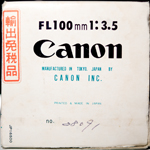
Yes - there are a couple of approaches how to achieve this:
This is implemented in Canon FD 200 f4 Macro - amazing lens with variable aperture;
The aperture lever has shape of the aperture lever like this:

_________________
Flickr.com |
|
| Наверх |
|
|
trifox
Зарегистрирован: 14.05.2008
Сообщения: 3614
Откуда: UK
Expire: 2014-05-29
|
Отправлено: Сб Июл 30, 2011 10:39 am Заголовок сообщения: |
|
Отправлено: Сб Июл 30, 2011 10:39 am Заголовок сообщения: |
|
|
trifox wrote:
| estudleon писал(а): |
The zebra 2,5/135 sonnar CZJ do it too. Superb optic and great mechanism. Oh, Zeiss.
Rino |
You wanted to say: Carl Zeiss Sonnar 135 f3.5 Zebra?
YEs - I know the lens upside-down - the lens has a similar feature but it's not achieved with slightly different approach.
tf
_________________
Flickr.com |
|
| Наверх |
|
|
scsambrook
Зарегистрирован: 29.03.2009
Сообщения: 2167
Откуда: Glasgow Scotland
Expire: 2011-11-18
|
Отправлено: Вс Июл 31, 2011 9:20 am Заголовок сообщения: |
|
Отправлено: Вс Июл 31, 2011 9:20 am Заголовок сообщения: |
|
|
scsambrook wrote:
| iangreenhalgh1 писал(а): |
That list of prices shows you why there are so many Zenits in the UK!
How much was a Zenit-B or E in those days? |
Ian - a Zenith E cost around £37 in 1969 (maybe a £ or so more or less) - using the Measuringworth calculator that equates to around - wait for it!! - a staggering £475 today. That figure comes up whether you use relative average income or retail price inflation as the basis for the comparison.
Given that the 'average' UK annual income is usually said to be around £24,000 today, that's roughly a week's gross earnings. Back in the late 1960s the 'average' income was around £40 per week, so the 'real cost' of the Zenith was about the same then as now. Interesting to think what you actually get today for £475, isn't it?
I guess we get 'more bang for our bucks'
_________________
Stephen
Equipment: Pentax DSLR for casual shooting, Lumix G1 and Fuji XE-1 for playing with old lenses, and Leica M8 because I still like the optical rangefinder system. |
|
| Наверх |
|
|
Mos6502
Зарегистрирован: 20.06.2011
Сообщения: 960
Откуда: Austin
|
Отправлено: Вс Июл 31, 2011 5:07 pm Заголовок сообщения: |
|
Отправлено: Вс Июл 31, 2011 5:07 pm Заголовок сообщения: |
|
|
Mos6502 wrote:
| scsambrook писал(а): |
Something else about Contarex lenses - Zeiss made a 50mm "B Planar" and a 35mm "B Distagon" where "B" stood for "Blitz" - i.e. "Flash". The lenses had the facility to set the Guide Number for whatever film/flashgun combination you were using and then as you focused, the aperture was automatically set correctly for the distance. And there were limiters, so you couldn't go beyond the permissable working range for your Guide Number.
Now, was that a cool design feature by Team Zeiss or another case of "a masterpiece of misplaced ingenuity" ? (That's how Mr Lipinsky described the Contax shutter in his 1950s book) I think it was cool. And it turned up in some other Zeiss cameras as well, certainly the Contaflex Super BC. And then we got computer controlled flashguns . . . |
A similar feature appeared on the Bolsey B-22. Where you could link the aperture to the focus and get "automatic exposure" when using a flash. Below you can see the pull out tab which has four settings for different types of bulbs engaged with the aperture selector.

Set-O-Matic by Marcfoto, on Flickr |
|
| Наверх |
|
|
|
|
 Русский
 Español
 中文
 Magyar
 Deutsch
 日本語
 Français



