| Предыдущая тема :: Следующая тема |
| Автор |
Сообщение |
BurstMox 

Зарегистрирован: 04.12.2011
Сообщения: 2036
Откуда: France
Expire: 2016-08-02
|
 Отправлено: Вс Июн 27, 2021 2:25 pm Заголовок сообщения: No name 50mm/2.8 |
|
Отправлено: Вс Июн 27, 2021 2:25 pm Заголовок сообщения: No name 50mm/2.8 |
|
|
BurstMox wrote:
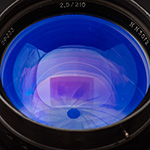
I tested a lens I have recently received.
It's a rather small lens, (front lens is between 1cm et 1.5cm wide). It has an Helios like design. I tested it, it has ~50mm focal lenght, and max relative aperture ~f2.8. It covers 24x36 without problem is give relatively good results on the whole plane at infinity, so it was made for 24x36. It had a diaphragm, but it was removed. The body shows that it had a focus system, and that the lens was mounted on the nose on some machine. Results definitly exclude the IR lens hypothesis. So I believe something technical, but I don't know which one. Reproduction machine rarely use helios design. Might be for a surveillance camera, but the body material looks old, more from the 50-60's than 70-80's.
Anyway, I like the results it gives on my A7.
#1

#2

#3

#4

#5

#6

#7

#8

#9

#10

#11

#12

Best regards,
_________________
Pierre
sovietlenses.fr
Soviet lenses Facebook group |
|
| Наверх |
|
 |
blotafton

Зарегистрирован: 08.08.2013
Сообщения: 1794
Откуда: Sweden
|
Отправлено: Вс Июн 27, 2021 2:43 pm Заголовок сообщения: |
|
Отправлено: Вс Июн 27, 2021 2:43 pm Заголовок сообщения: |
|
|
blotafton wrote:
Sweet mystery lens. I like the bokeh. 
Could it be a Heligon or Xenon? |
|
| Наверх |
|
|
BurstMox
Зарегистрирован: 04.12.2011
Сообщения: 2036
Откуда: France
Expire: 2016-08-02
|
Отправлено: Вс Июн 27, 2021 7:03 pm Заголовок сообщения: |
|
Отправлено: Вс Июн 27, 2021 7:03 pm Заголовок сообщения: |
|
|
BurstMox wrote:
| blotafton писал(а): |
Sweet mystery lens. I like the bokeh.
Could it be a Heligon or Xenon? |
I don't think so, I found this lens on ukranian market, I believe it's a soviet lens.
_________________
Pierre
sovietlenses.fr
Soviet lenses Facebook group |
|
| Наверх |
|
|
alex ph
Зарегистрирован: 16.03.2013
Сообщения: 1802
|
Отправлено: Вс Июн 27, 2021 8:57 pm Заголовок сообщения: |
|
Отправлено: Вс Июн 27, 2021 8:57 pm Заголовок сообщения: |
|
|
alex ph wrote:
Nice results. Balance between focus sharpness and OOF character makes it looking close to a projection triplet. |
|
| Наверх |
|
|
Lightshow


Зарегистрирован: 04.11.2011
Сообщения: 3666
Откуда: Calgary
|
Отправлено: Вс Июн 27, 2021 11:34 pm Заголовок сообщения: |
|
Отправлено: Вс Июн 27, 2021 11:34 pm Заголовок сообщения: |
|
|
Lightshow wrote:
Looks like a nice chunk of brass, which IMO excludes a soviet lens which would likely be aluminum, not brass.
The results are very nice, well worth the effort to clean up properly, and even have it transplanted into a helicoid/body.
You didn't mention it's back focus, that will help narrow down the search, measure from the film plane to the rear element(smaller element), and again measure from the film plane to the centre of the aperture slot.
While it's getting cleaned, try to create a drawing of the shapes of it's lens elements, this will expose its family heritage, which will aid in deducing its manufacturer and ultimately what lens it is.
Should be a fun little puzzle to solve and use.
_________________
A Manual Focus Junky...
One photographers junk lens is an artists favorite tool.
My lens list
http://www.flickr.com/photos/lightshow-photography/ |
|
| Наверх |
|
|
D1N0

Зарегистрирован: 07.08.2012
Сообщения: 2726
|
Отправлено: Вс Июн 27, 2021 11:41 pm Заголовок сообщения: |
|
Отправлено: Вс Июн 27, 2021 11:41 pm Заголовок сообщения: |
|
|
D1N0 wrote:
Reminds me of the Domiplan. A triplet?
_________________
pentaxian |
|
| Наверх |
|
|
planet.groove


Зарегистрирован: 20.04.2016
Сообщения: 74
Откуда: Berlin, Germany
|
Отправлено: Пн Июн 28, 2021 9:20 am Заголовок сообщения: |
|
Отправлено: Пн Июн 28, 2021 9:20 am Заголовок сообщения: |
|
|
planet.groove wrote:
hi,
looks like the inner part (lens section) of a usual lens with removed aperture blades.
_________________
https://www.flickr.com/photos/planetgroove |
|
| Наверх |
|
|
BurstMox
Зарегистрирован: 04.12.2011
Сообщения: 2036
Откуда: France
Expire: 2016-08-02
|
Отправлено: Пн Июн 28, 2021 5:54 pm Заголовок сообщения: |
|
Отправлено: Пн Июн 28, 2021 5:54 pm Заголовок сообщения: |
|
|
BurstMox wrote:
| Lightshow писал(а): |
Looks like a nice chunk of brass, which IMO excludes a soviet lens which would likely be aluminum, not brass.
The results are very nice, well worth the effort to clean up properly, and even have it transplanted into a helicoid/body.
You didn't mention it's back focus, that will help narrow down the search, measure from the film plane to the rear element(smaller element), and again measure from the film plane to the centre of the aperture slot.
While it's getting cleaned, try to create a drawing of the shapes of it's lens elements, this will expose its family heritage, which will aid in deducing its manufacturer and ultimately what lens it is.
Should be a fun little puzzle to solve and use. |
Soviets also used brass. See for exemple this OF-184 (1955)

Same for Industar-4 and other technical lenses.
I did not measured the back focus distance precisely, but distance at infinity looks like it could be used for M42 mount lens. Here is the lens set at infinity on the A7.

As considering the optical design, the rear group is really easy to remove (just unscrew). The intern side is like on helios design, and the reflexion let me guess it has 2 separated elements. The rear element looks the same, but a bit bigger. That's why to me, it definitly looks like a double gauss planar type, so Helios if it has soviet roots.
Here is the rear group.
#1

#2

_________________
Pierre
sovietlenses.fr
Soviet lenses Facebook group |
|
| Наверх |
|
|
BurstMox
Зарегистрирован: 04.12.2011
Сообщения: 2036
Откуда: France
Expire: 2016-08-02
|
Отправлено: Пн Июн 28, 2021 5:57 pm Заголовок сообщения: |
|
Отправлено: Пн Июн 28, 2021 5:57 pm Заголовок сообщения: |
|
|
BurstMox wrote:
| planet.groove писал(а): |
hi,
looks like the inner part (lens section) of a usual lens with removed aperture blades. |
Usualy, the lens block is separated from the focus block.
Here, this part also has focus helicoidale part, which is not usual. That's why I think it was mounted directly on a technical thing, the body inside the machine, screwed by the nose, and only letting see the frontal glass.
_________________
Pierre
sovietlenses.fr
Soviet lenses Facebook group |
|
| Наверх |
|
|
|
|
|
Вы не можете создавать новые темы в этом форуме
Вы не можете отвечать в темах этого форума
Вы не можете редактировать свои сообщения в этом форуме
Вы не можете удалять свои сообщения в этом форуме
Вы не можете голосовать в опросах этого форума
|
 Русский
 Español
 中文
 Magyar
 Deutsch
 日本語
 Français



